39 min. Read
10.29.21

The Noom Report

In this article:

Noom is a fast-growing, digital health company that started with a consumer weight loss program and is moving into a range of medical conditions. E&O put together this 10,000-word report, including strategy shifts and pivots, annual paid subscribers figures, revenue figures going back to 2015, increasing users-to-coach ratios, and much, much more.

Noom is one of the few digital health companies still in existence today that got its start before the advent of smartphones and app stores. Noom would go on to become the top-grossing health and fitness app for three years running, before sunsetting that app — at its peak — and rebuilding to move more deeply into healthcare.

When that pivot failed (and the company was nearly out of money), it refocused on its consumer business and quickly grew into the half-a-billion-dollar-revenue-generating company we know today.

As always, this E&O report digs into the moves Noom made along the way, and it is focused on the under-reported parts of the company’s story, including the pivots and missteps that are unlikely to make it into a Noom S-1.

Let’s begin by trying to make some sense of Noom’s numbers:

Noom’s big number moat: 45 million

If you have read any news article about Noom in the past five years, it probably mentioned that Noom has more than 45 million users. That figure bothered me because I noticed it remained consistent from December 2016 up through the present.

Once you read the rest of this report, you will understand that Noom has spent hundreds of millions of dollars on advertising in the last few years, which means that its cumulative number of users must have gone up *dramatically* since the end of 2016.

Why hasn’t the company shared an updated number? I asked Noom for a current number and their official response was that they don’t disclose their “number of users” but that I could say “millions of users worldwide.” I believe that. As we’ll see below, Noom crossed into the “millions” — plural — of paying users in 2020.

I have seen larger numbers than the oft-quoted 45 million in some news articles — both “more than 47 million” and “more than 50 million” have appeared in print. (In 2019, Noom used “50 million” in a press release too.) Noom told me that a recent article claiming Noom had more than 50 million users was inaccurate, even though it claimed to get the number from someone at Noom.

A job ad from Noom posted in 2021 included the 45 million figure, so, while the company has an official position on how to talk to the press about this, that’s still the number other parts of the company use when they need one.

So, where did the 45 million figure come from? As detailed in the Products section below, before Noom was Noom it was named WorkSmart Labs. The company originally developed fitness tracking and calorie counting apps that were among the most successful Android apps when that app store first launched. Noom eventually rolled most of the functionality of those apps into its weight loss app and finally sunsetted its original apps by 2015. Noom’s 45 million figure included those early downloads from the original WorkSmart Labs apps like CardioTrainer and Calorific.

Are they “users” or “downloads” or “installs”? Over the years Noom has used different units when sharing their big number. In the early years the company typically called them downloads, but then switched to “installs” for most of 2015 when the figure had already hit 32 million. Ever since 2016 Noom has almost always referred to “users” as the unit attached to the big number.

Installs vs downloads: There is an important difference between installs and downloads. (Read more about this in the Pre-loaded apps section below.) Unknown millions of Noom’s so-called user base never actually downloaded the company’s apps onto their smartphones. One of the company’s most important tactics in its early years was striking deals with smartphone device manufacturers and mobile operators around the world to pre-load CardioTrainer onto the Android devices they sold to users. That explains Noom’s tendency to call these “installs” in 2015. How many people with these pre-installed apps actually used CardioTrainer? That’s not a number that’s ever been shared.

Considering all that, it’s a bit disingenuous that Noom occasionally makes statements like this one back in December 2016:

“Noom has changed the lives of over 45 million users.”

For what it’s worth, this week I went through Noom’s sign-up page and it provided me with a few more user metrics, but these were specifically for people who used the program and successfully lost weight. However, these numbers seem mostly fictitious:

  • Because I told Noom I was in my 30s, the company shared that it has helped 710,719 men in their 30s “successfully lose weight.”
  • Later it told me it had helped 1,534,286 people successfully lose weight (implying “in total”). Hmm. Since I had read the company had an easier time acquiring women as users than men, those numbers surprised me — almost half were men?
  • So, I went through the sign-up process again but said I was a woman and, lo: “We’ve helped 710,719 women in their 30s successfully lose weight!” (That’s the exact same number for men in their 30s!)
  • When I signed up as a man in my 20s, I got a different number though: “We’ve helped 384,465 men in their 20s successfully lose weight!”
  • When I signed up as a man in my 50s: “We’ve helped 568,798 men in their 50s successfully lose weight!”

I stopped at that point.

Back to the big 45 million number: Noom’s official silence on its overall user base is likely to break if the company files for an IPO in the coming year, as is widely expected. I’m a bit curious to read how the company describes its historical numbers: users? installs? downloads? But I’m more curious to see how many people downloaded Noom’s app since 2016, which would provide a better understanding of the results of the company’s massive advertising spend in recent years.

In any case, Noom’s 45 million user moat never really existed. Read on for a more helpful set of numbers — estimates for Noom’s paying subscribers along with calculated average revenue per user (ARPU).

The metrics from this slide come from a few different sources, but they are mostly from a presentation that Noom executives gave at the end of 2019. For the years 2016-2019, I calculated the average revenue per user (ARPU) for each year by dividing the company’s annual revenue by the number of paying subscribers that year.

2020 caveats: The numbers for 2020 above are much shakier. I have heard that Noom has used the phrase “more than 2 million paying subscribers” to describe its user base in 2020, but I got to the 2.4 million figure by dividing Noom’s $400 million revenue figure for that year by the ARPU from 2019. So, that 2.4 million paying subs in 2020 is largely resting on the assumption that Noom’s ARPU was consistent from 2019 to 2020. (Of course, Noom has stated that its revenue for 2020 was “more than $400 million,” which would mean they had more than 2.4 million paying subscribers that year if the ARPU assumption was correct.)

Noom also charges a small amount for its trial (using some mind-bending psychology). Do those paying users count as paying subscribers?

Mostly US and mostly women: Before we get into those annual revenue figures below, it’s worth mentioning two other details about Noom’s user base here. Noom’s executives recently shared that about 80 percent of its users are in the US. The company has also historically attracted a higher percentage of women vs men.

Over the past few years, Noom has frequently shared its annual revenue figures from 2017, 2018 and 2019. It also disclosed a ballpark number for its 2020 revenue. What’s new in the chart above are revenue figures for 2015 and 2016, which show the company had flatlined by the mid-aughts. The Noom we know today was forged during those lean years for the company. (For more on the significance of 2016 as well as the company’s products’ evolution, see the Timeline of Products below and the Employer section of this report.)

Growing the team: In a recent podcast interview, Noom co-founder and president Artem Petakov said the company has purposefully managed its headcount so that the company doesn’t grow too quickly:

“We’re also careful. We have decided not to more than double the company in a year just because we have found that companies go astray when they grow too quickly. We are very careful about our culture and making sure we have enough time to evolve it as we scale. That’s been a critical part of the equation. A lot of times you have that loss of excellence as you scale and you never get it back.”

In that same interview Petakov also described the company’s revenue growth between 2019 and 2020:

“We can say that we about doubled in 2020. So we hit that approximately $200 million in revenue in 2019 and then we doubled that in 2020.”

That’s how Noom’s other executives typically frame it too, however, they had previously disclosed that the 2019 revenue figure was actually $237 million. Why round down? Just speculation, but it seems like Noom didn’t quite double its revenue between 2019 and 2020.

UPDATE: After this report went live, Deloitte published its list of 500 of the fastest-growing private tech companies. The list included Noom with a 3,052 percent growth between 2017 and 2020. While Deloitte doesn’t disclose actual revenue numbers, the percent growth figure is a very helpful number because we know Noom brought in $12 million in revenue for 2017. As mentioned above, Noom has only ever given a rounded-off number for its 2020 revenue figure, which it usually says was around $400 million. I previously assumed the company was rounding down, but if Deloitte’s 3,052 percent number is accurate then Noom was rounding up. Its 2020 annual revenue was more like $378 million if the math all holds.

If Noom files an S-1 for an IPO, I’m curious how close Noom came to doubling revenues between 2020 and 2021 too.

According to one source, the most popular pricing option for Noom is the four-month plan. While this is likely too generous, let’s assume the average paying subscriber sticks with the program for four months. We also know more or less how many full-time coaches Noom employed during the years 2019, 2020, and currently in 2021:

  • 2019: Noom started the year with about 1,000 coaches and ended it with about 1,500. So, 1,250 on average.
  • 2020: Noom started this year with 1,500 and ended with 2,000 coaches. So, 1,750 on average.
  • 2021: Noom started the year with about 2,000 coaches and currently has 3,000. So, called it 2,500.

The chart above is based on numbers that Noom executives shared at the end of 2019. At the time the company was at about a 350:1 user-to-coach ratio on average. It hoped to hit 500:1 in 2021. Since we have numbers for how many coaches Noom had on staff for these three years along with estimated paying subscriber numbers for both 2019 and 2020, we can piece together the coaching ratio ourselves.

  • 2019: Noom had 1.4 million paying subscribers and an average of 1,250 coaches. That’s a ratio of 1,120:1 if each of the paying subscribers used the service for the entire year, or 373:1 if they used it for four months (a third of the year) on average. This coaching ratio squares with the official 350:1 the company shared at the end of 2019, which reinforces the assumption that a four-month plan is likely the most popular.
  • 2020: E&O estimates that Noom had about 2.4 million paying subscribers and 1,750 coaches. That comes to a user-to-coach ratio of 457:1 if the average paying sub was in the program for four months. The chart above reflects Noom’s plan as of late 2019, so this ratio is about right for 2020, which is when Noom hoped to average 400:1.
  • 2021: We’re on much shakier ground speculating about 2021, a year that still has a few months left in it. If Noom grows its revenue and paying subscriber base as much as it did between 2019 and 2020, then 2021 should see about 4.1 million paying subscribers. Noom currently has 3,000 coaches. Again, assuming the average sub pays for four months of Noom’s program, then the users-to-coach ratio would average 547:1 for 2021, which is slightly higher than Noom’s hoped-for 500:1.

The more important users-to-coach ratio is the number of actively engaged users-to-coach, but in all likelihood, Noom assumes a percentage of the users in these ratios above will be unresponsive. Coaches still need to attempt to engage them — they still add to the workload — however, a higher percentage of disengaged users will make a larger ratio possible.

Noom’s ability to scale its coaches is one of the company’s central growth problems. It’s a two-sided problem too: Users don’t want to feel like they are talking to a chatbot if they think they are paying for a real-live coach, and health coaches don’t want to be overwhelmed by a massive caseload.

Despite the technology helping coaches scale up the number of people they can help in the Noom program, it will likely continue to be orders of magnitude more than the number they are used to from past digital health coaching jobs. Noom’s executives talk about reaching Amazon-like infrastructure to support their future ambitions, but I think it will continue to require a large number of human coaches.

Preloaded apps and Noom’s early B2B years

As mentioned above, one of Noom’s early growth tactics (and probably its most important one during its WorkSmart years) was its ability to convince smartphone device makers and mobile service operators to preload its CardioTrainer app onto Android devices. That means the CardioTrainer app was already on an Android user’s home screen before they bought their device, these people never chose to download it themselves.

By 2012, Worksmart boasted in a job ad that it had grown its business with no marketing team and its app had “been pre-installed on dozens of phones and phone networks” around the world. (It’s worth remembering that before Apple and Google launched their app stores, mobile software was distributed this way: Mobile operators and phone makers decided what should be pre-installed on the phones they offered subscribers.)

Noom’s success on this front can likely be traced back to its deep connections with Google. Noom co-founder and president Artem Petakov was a technical leader on Google Maps’ user-generated maps team. He actually stayed on as a Google employee while working on WorkSmart as a side hustle for years — until CardioTrainer launched. That happened on the same day as the launch of the Android Market, Google’s answer to Apple’s AppStore.

Of WorkSmart’s first 15 employees, five of them were ex-Googlers. In June 2009 a handful of Googlers joined as angel investors. Petakov’s old boss Bernhard Seefeld, a senior PM focused on Google Map at the time, became one of the companies early mentors.

Google itself helped WorkSmart and featured CardioTrainer as a breakout app in the brand new Android Market. Here are a few highlights of how Google buoyed WorkSmart from the outset:

  • October 2009: Motorola launches its soon-to-be popular smartphone, the Droid with joint marketing from Google. CardioTrainer is not a pre-loaded app on the Droid, but it gets mentioned in most media releases related to the Droid’s launch as an app to download. WorkSmart’s user base grows steadily as a result.
  • November 2009: Google invites WorkSmart to demo CardioTrainer as one of four “Best Android Apps” to be featured in Google’s booth at a mobile industry conference in San Francisco.
  • May 2010: Google invites WorkSmart to its annual developer event, Google I/O 2010 to demonstrate CardioTrainer in “the Sandbox,” which helps WorkSmart connect with “many amazing engineers.”
  • September 2010: Google highlights CardioTrainer and Fitbit as the first two consumer apps to integrate with its PHR offering, Google Health. Given its already large user base, CardioTrainer quickly becomes the largest data feeder for Google Health.
  • February 2011: Google’s Android team invites WorkSmart to demo CardioTrainer from the Google booth at the biggest mobile industry event, Mobile World Congress in Barcelona.

I wasn’t able to track down every device and mobile operator that preinstalled WorkSmart’s apps in the early years, but a few examples were the Samsung Galaxy Xcover 2, the Motorola DEFY+, and the Sony Ericsson Xperia X8.

This channel partner strategy helped Noom grow its total number of installs to 32 million by April 2015. During the second half of 2015 and first half of 2016 this tactic had been so effective that Noom no longer referred to its cumulative user number as “users” or “downloads.” Instead, the company had 32 million “installs.”

Noom also likely won favor from Google by remaining an Android-only app company for so long. As noted below in the timeline of Noom’s products, the company didn’t launch an iOS app until May 2013. By then its Android apps had been available for three years and had accumulated some 17 million installs.

Of course, by the end of 2014 most big tech companies had already launched their own fitness apps that competed with Noom’s:

  • Samsung launched the first iteration of its free Samsung Health app in July 2012.
  • Apple launched its Health app in June 2014 giving iOS users a default health and fitness app.
  • Google Fit launched in October 2014 become a default fitness app on many Android devices.

These developments led to dark days for Noom. Since the company had relied on Google and its other channel partners for so much of its early momentum as a fitness app developer, it hadn’t invested enough into building a brand or its own direct-to-consumer marketing channel. In many ways, these early years at Noom were driven by its B2B strategy, but that would have to change.

Before we continue with the Noom timeline, here’s a different cut at the company’s history through the lens of its many product launches. (Skip this next section to return to the company’s strategy timeline below.)

Timeline of Noom Products

2005: Artem Petakov and Saeju Jeong meet for the first time and discuss Petakov’s ideas for wellness tech. They name the project HumanTra, a portmanteau of Human and Training, and each invest $30,000 to get it off the ground. Petakov’s initial product concepts planned to use sensor technology to make cardio and weight exercise interactive and fun. It’s not until August 2007 that the first prototype device — an interactive stationary bike — finds its way into a local gym for user feedback.

2007: In late 2007 the HumanTra project officially incorporates and renames itself to WorkSmart Labs. The WorkSmart team (of four) adds TV capabilities to its interactive bike prototype, which it calls Cardio Entertainment, and permanently installs it in a local gym.

2008 H1: In March 2008 the company lands its first $500,000 from an entrepreneur friend of Jeong’s mom in Korea. In July WorkSmart develops a new prototype — a sensor-based system for tracking and coaching free weight exercise. It also begins to prototype an interactive, cable-based weight machine.

2008 H2: The second half of the year is a big one for WorkSmart. Artem finally quits his job at Google to focus full-time on the startup. WorkSmart also decides to move into mobile wellness and begins development on a cardio training app that it manages to build in time to launch on Day One with the brand new Android store. The app, named CardioTrainer, quickly becomes the top-rated fitness app in the store. WorkSmart sees CardioTrainer as little more than a marketing move that will help it build up its brand for when it starts selling its interactive exercise machines. It hires mechatronics engineering firm Pocobor to take its hardware prototypes to the next level.

2009: In March WorkSmart launches its first paid module for CardioTrainer called Race Against Yourself that cost $2.99 in a one-time fee. The team celebrated WorkSmart’s first revenue by buying a bottle of wine. Here’s how WorkSmart pitched the original premium feature on the day it launched:

“It makes exercising a lot more fun by allowing you to race against your previously recorded tracks. Not only does it simulate a full virtual race, it also speaks to you and tells you exactly how far behind or ahead you are throughout the race. We’ve been running and biking with this feature for the past 2 months, and we have all improved our times a lot. It’s incredibly motivating — sometimes almost too much so, so please use it wisely!”

2010: CardioTrainer surpasses 1 million downloads and heads to Japan thanks to a partnership with mobile carrier NTT Docomo. In July WorkSmart launches its second app, a free one called Calorific Food Tracker. The app aims to make it easy to track food with just two clicks — one for the size of the meal or snack (tiny, small, medium, or large) and other for how healthy it is (green/healthy, yellow/okay, red/bad).

2010: In August WorkSmart adds another paid feature to its flagship app called Weight Loss for CardioTrainer, which like Race Against Yourself also carries a one-time fee of $2.99. However, the following month WorkSmart announces a new premium version called CardioTrainer Pro that includes both Race Against Yourself and Weight Loss along with a new interval training feature:

“We’ve just released CardioTrainer Pro, the most advanced version of CardioTrainer to date. This new premium version of CardioTrainer includes all current premium features, plus all-new interval training. The whole bundle is a one-time fee of $9.99, and this covers free upgrades for life. As we add more features, the bundle will get more expensive, so this is our way of saying thank you to our earliest and most dedicated CardioTrainer users.”

2011: In May WorkSmart launches a new app called Noom Weight Loss on the Android Market that the company describes as a combination of its CardioTrainer and Calorific apps. While this first version is free it includes prompts to buy CardioTrainer Pro within the app. It crosses 1 million downloads in less than 30 days.

2011: Then in December 2011, WorkSmart announces a rebrand: it is now Noom. It also launches a new premium version of Noom Weight Loss called Noom Weight Loss Coach, or Noom Coach for short. It’s the company’s first subscription product at $9.99/month:

“Noom Weight Loss Coach is like version 2.0, completely redesigned from the bottom up to provide users with the best possible weight loss experience with the focus on the coaching, not tracking. The weight loss coach is intelligent because it gives you specific things to do every day, removing any burden on the user to decide what to do next. It includes all of the tools to keep track, but they’re a seamless part of the experience that helps you lose weight… As the name implies, it acts as a personal coach that guides you through your weight loss journey, coaching, tracking and motivating you along the way. It is Artificial Intelligence software (the technical AI term is ‘Expert System’) based on the latest research in weight loss, nutrition, psychology that simulates how a real coach would interact with you. Think of it as Apple’s Siri for weight loss.”

2012: After an eventful number of years, this one is relatively quiet except for a big launch for Noom in Korea, where it establishes a new office. New iterations and tweaks to Noom Coach continue, of course.

2013: One reason that 2012 may have been uneventful was that Noom had originally aimed to launch for the iPhone — finally — after being exclusively available to Android users for four years. The company said that on iOS it couldn’t match its Android experience so it pushed off until 2013. In May 2013 Noom Weight Loss for iOS.

2013: As step-tracking wearable devices like those from Fitbit become popular, Noom answers back with Noom Walk. The company says the app is free and always will be. At the time executives tell me that, more than anything, the app will help drive awareness of the Noom brand. (Later during Noom’s 2016 B2B push, the company envisioned Noom Walk as a B2B offering targeting gait-related medical conditions.)

“Noom Walk is a free, no-hassle pedometer app that counts your steps and shares your progress with friends. We truly believe Noom Walk is the best technology available for seamlessly tracking and motivating movement for better health.”

2013: Another major launch from Noom comes in July 2013 when the company introduces a new feature to its paying subscribers: Groups. This is the first time the company offers something like coaching. The groups are not led by coaches at this point, however, but “facilitators”:

“Noom Groups are made up of 10-15 Noomers who come together in the Noom [Weight Loss Coach] app to help support each other’s wellness goals! We’re hoping that you’ll chat with your group whenever you want and need some support, motivation, accountability, or extra cheers – whether you want to brag about an awesome workout or share that ice cream that you logged at midnight last night, your group is there for you! Each Group also has its own Group Facilitator to keep the chats lively and make sure that the Group stays welcoming and supportive for all members.”

2013: In the fall of 2013, Noom quietly developed the first version of its diabetes prevention program.

2013: Finally, Noom expanded beyond the US and Korea by launching German and Japanese language versions of its app in August.

2014: Noom once again expanded its reach by launching a Spanish language version of its app at the tail-end of the year. Notably, Noom’s flagship Coach app spent these past three years (2012 through 2014) as the highest-grossing app in the Health & Fitness section of the Android Market.

2015: Noom finally adds a premium option that pairs consumers with a real, live human coach, but this service initially costs substantially more. Noom’s pricing page includes four options: a tracking-only version of Noom that’s free; a group-only coaching version of Noom that is $10 per month; a new “personal coaching” offering that runs $40 per month; and an “enterprise” pricing option that requires contact with the team for pricing details.

2015: This year the company also starts to get more serious about moving into healthcare with the fleeting launch of Noom Health, which was “designed specifically for payers, providers and employers to use in the delivery of behavior change programs to prevent chronic diseases such as diabetes.” The offering seemed to be more geared at providers interested in remote patient monitoring and patient engagement than employers: “Healthcare providers who use Noom Health have access to a customizable dashboard and messaging system allowing them to monitor and communicate directly with their program participants. These tools were tested and refined as part of a beta program that used Noom Health as a virtual complement to a regional diabetes prevention program being delivered in 2014 by EmblemHealth, New York’s leading health insurance and wellness company.”

2016: In 2016 Noom reveals that it has expanded its healthcare programs beyond weight loss and diabetes prevention: “Noom has expanded its curricula across the acuity spectrum and now features programs for pre-hypertension, hypertension and diabetes management in addition to its flagship weight loss and diabetes prevention programs.”

2016: As of May 2016, Noom began marketing its prevention programs directly to consumers, while reserving chronic condition management programs for its B2B clients. This marked a dramatic shift in positioning on Noom’s website. Pricing went up (programs start at $60 a month at this time) and healthcare programs gain equal prominence with its flagship weight loss program.

2017: After close to a year, Noom’s marketing begins to de-emphasize B2B again and re-focused on its flagship weight loss program (more on this below).  However, its structured programs now include one for comorbid diabetes and hypertension management for B2B clients only.

2018: By 2018 Noom has settled on a direct-to-consumer pricing strategy that it (more or less) sticks with up through the present. Plans for its weight loss program run:

  • Monthly plan: $59 USD
  • 2-month plan: $99 USD (originally $120)
  • 4-month plan: $129 USD (originally $240)
  • 6-month plan: $149 USD (originally $360)
  • 8-month plan: $159 USD (originally $480)
  • 12-month plan: $199 USD (originally $620)

2019: Noom announces its big pharma partnership with Novo Nordisk that pairs a customized version of the Noom program for people with obesity with Novo’s obesity drug Saxenda. (More on this in the pharma section below.)

2020: At the end of 2020, Noom starts testing a new program called Noom Healthy Mind, a “program based on behavior change that helps reduce stress and anxiety, and increases overall happiness.” The program launches nearly a year later with a new name.

2020: Another skunkworks project run by Noom co-founder and president Artem Petakov makes it out into the wild after the company accidentally emails a large portion of its email list to ask them to enter a virtual waiting room for a telehealth visit. While the telehealth feature has yet to launch, the beta program points to Noom’s broader healthcare ambitions.

2021: In October Noom launched a D2C stress and anxiety-focused program called Noom Mood. The new program only has one price plan for now: a 4-month auto-renewing plan for $149. The program’s curriculum is a series of daily 10-minute lessons that make use of Cognitive Behavioral Therapy (CBT), Dialectical Behavioral Therapy (DBT), and Acceptance Commitment Theory (ACT). Noom also bundles in some other mindfulness techniques, human coaches and mood logging.

Noom’s lean years: 2014-2016

In a 2018 press release Noom summed up its most trying period in a few neat sentences:

“For years, Noom had top-grossing applications on the Google App store, winning awards and millions of downloads, but the health results were not as powerful as the team had expected. In 2013 Noom experimented with combining human coaches with mobile technology, and immediately saw 4x better results – in weight loss, engagement, and other health measures. They spent the next three years perfecting the tech and increasing the number of patients each coach could handle, launching a fully-redesigned program in 2016.”

Noom has said its main app was the top-grossing health app in the Android Market every year from 2012 to 2015, but, as noted, in the Preloaded section above, Big Tech companies started competing more directly with Noom after being the company’s key channel partners since its inception. A general decline in the wider “there’s an app for that” marketing hype around this time also slowed Noom’s momentum.

In a more recent podcast interview, Noom’s CEO Saeju Jeong was a bit more forthcoming about his company’s difficult years and admitted the company’s cash balance “was very poor” at this time:

“Frankly speaking… we received a lot of tough feedback [from investors]. We were not able to figure a scalable business model by [2014]. We received a lot of good support in the beginning. The AppStore market was booming, remember? And a lot of investment was made. Noom was definitely a beneficiary as they were excited to invest in the best fitness app maker. When we pivoted from — we actually abandoned our number one top-grossing application in the market. We abandoned that and went back to the cave and rebuilt from scratch. And it took another two years and our cash balance was very poor and it was an extremely difficult time. I vividly remember during those years I had tremendous stress. It was not easy to capture talent because we didn’t have great traction from end users. We didn’t have a business model nor did we have enough capital.”

Jeong said that the company was able to hang onto enough of its key talent by focusing on the company’s mission and a new resolve to prove that AI plus human coaches could deliver better outcomes:

“That was a very difficult journey but our investors, although they were unhappy with our speed of growth, they believed in us because they have seen our ability to build world-class applications. So, they did not doubt our ability that we can build technology, but they were unhappy with our speed of growth in terms of business. But they bet on us. They continued to sponsor and invest in us and I am very thankful.”

Jeong also revealed that this epiphany that the company’s original flagship app Noom Coach (all-AI, no human coaches) came about after the company’s first clinical trial data showed disappointing results:

“We founded the company to deliver healthy outcomes, but our clinical trial research at the time — although we were able to sell a lot of services — we didn’t make that much of an impressive outcome. We were not happy. That’s why we pivoted and made Noom significantly different. We were searching how to do better and six years ago when we added human coaches — and, oh my God — it was a day and night change.”

Based on the timing, that sounds like Noom was not happy with its big 2016 clinical trial, which it still ended up promoting heavily when it first published. In fact, puzzlingly, it still touts those results today. (More on that in the Efficacy section below.)

By the end of 2016, however, Noom’s priorities were still mixed up. It moved into 2017 planning to stage a massive comeback by focusing on both its new, human coach-powered consumer program and its ambitious suite of B2B programs. As detailed in the Employer section below, in mid-2017 Noom made the difficult decision to put its B2B plans on the back burner and re-center the company on the D2C weight loss opportunity.

Becoming a healthcare company would have to wait.

Annual ad spend, estimated CAC, and more

Almost five years after it was officially incorporated, Noom decided in 2012 that it was time to build out a marketing function. Maybe it was a coincidence that Noom made this move just months before its Big Tech partners started rolling out their own competitive apps to Noom, which they would eventually preload onto Android devices (like they use to do for Noom’s CardioTrainer app). Or maybe Noom saw it coming.

In the 2012 job ad for Noom’s first Chief Marketing Officer, the company wrote that this person would be “the first dedicated marketing person on our staff.” Also:

“So far, we have grown with no marketing at all, by building incredible products. Now we are ready step it up, and bring a top-tier Chief Marketing Officer to accelerate our growth. We are backed by Kleiner Perkins and Qualcomm, we make the world’s most popular Android fitness apps, and have built an incredible 15-person team, a third of which is ex-Googlers. We need someone who can help us understand our user base, improve conversion, create a real brand presence, and sell our products to millions more. And that’s just the first month.”

It would take at least six more years until Noom’s marketing spend attracted much notice from the wider marketing world, but Noom would go on to be one of the biggest spenders on consumer advertising in 2019 and 2020.

Starting in 2016, Noom’s marketing efforts focused on digital channels. An article in PR week summed up Noom’s marketing efforts between 2016 and 2018 like so:

“Since [2016], its PR and advertising efforts have been online-focused, targeting women aged 25 to 55.”

One example of an ad that Noom ran in 2017 was a Facebook ad that took a shot at its biggest competitor, Weight Watchers:


Noom decided it knew enough about how to market its weight loss program by the end of 2018 to move into TV ads.

At the start of 2021, Noom’s job ads for marketing roles sometimes included an impressive detail about the company’s marketing prowess. As one job description read:

“Through your insights and advancements, you will improve the efficiency of our $200M+ annual ad spend.”

Given that the job description was posted in the spring of 2021, it is most likely that the more than $200 million annual ad spend was the budget for 2021, but Noom also spent at least $100 million on ads in 2020 and in the tens of millions in 2018 and 2019 too.

Here’s a round-up of analysts’ estimates for various components of Noom’s ad spend over the past few years along with other details that hint at Noom’s marketing strategy in recent years:

  • In 2018 Noom spent between $1 million and $10 million on advertising each month. One source suggests that in mid-2018 Noom was on track to spend about $20 million on ads that year.
  • Noom would go on to become a dominant sponsor of podcasts by the end of 2019, and it only started testing that channel in 2018.
  • Noom’s non-digital ad spend in 2019 was approximately $51 million, according to Kantar. (That includes TV, radio, and print publications.)
  • Another group estimated that Noom spent $42 million on TV ads in 2019, which would be a carveout from the figure above, not additional ad spend.
  • While I couldn’t track down a number for 2019, Noom spent about $54 million on digital ads in 2020, according to one tracker.
  • In the first half of 2020, Noom spent just under $48 million on TV ads. Combined with the number above, and assuming it spent just as much on TV ads in the second half of the year, it seems likely Noom’s ad spend approached $200 million in 2020.
  • A job ad in late 2021 described Noom’s ad spend as “a 9-figure global, multilingual ad budget that is largely driven by Facebook.”

Just for fun, let’s assume that $200 million is about what Noom spent on ads in 2020. While that might be a stretch, we do know the company brought in more than $400 million in revenue for 2020. While a small percentage likely came from the company’s B2B partnerships, almost all of that revenue came from about 2.4 million paying subscribers.

A very loose, ballpark for Noom’s CAC in 2020 is:

Rough estimate of 2020 CAC: $200 million in ad spend / 2.4 million paying subscribers = $83 per paying subscriber

If we assume that the average selling price or average revenue per user was the same in 2020 as it was in 2019 — $169 — we can start to build out the rough unit economics.

Influencers: As part of its digital marketing strategy, Noom has also developed an influencer marketing strategy. At one time, it hired a firm called Ben AI that helped it find lesser-known influencers. Noom also pays $15 for every successful new trial sign-up with a generous 30-day tracking window.

Beyond influencers: Noom inks affiliate marketing partnerships with a broad range of groups beyond social media influencers. Its head of marketing partnerships lists out a number of other categories that the company works with, including “affiliates”, “brand partnerships”, “custom content”, and — interestingly — “employee benefits”. These deals are typically paid out on a CPA (cost per action) basis.

Referrals: Noom also offers a referral incentive for Noom users who successfully convince friends to sign up: a $20 Amazon gift card.

Agency acquisition: Noom’s marketing infrastructure took another leap in the spring of 2020 when the company acquired one of its ad agency partners to bring the team in-house. Opus House worked with Noom and at least three other customers at the time of acquisition. It also had annualized billings of $55 million when Noom acquired it. Opus Growth had no outside funding backing it. Of course, there’s a good chance much or most of that (annualized) $55 million would have come from Noom.

Positive friction funnel: At some point (around 2019) Noom swapped out its 30-second onboarding quiz for a time-intensive, incredibly long onboarding quiz that captured a ton of information about potential Noom subscribers and helped some of them steel their resolve to complete the program if they signed up for it. While I don’t have any insight into the actual numbers this long intake form has remained in place for years now. The company seems to have found this “positive friction” up front works. For a long-form breakdown of Noom’s funnel and other specific marketing tactics the company employs, check out this other paid report from that a number of E&O readers pointed me to as I began researching Noom earlier this year.

No stone unturned: Noom’s clearly had a “try everything” marketing strategy for years now. It’s been a top marketing partner of Publisher’s Clearing House — yes, the big check people. It sponsored a race between actor Alexander Skarsgard the UK’s Prince Harry as they trekked to the geographic South Pole. Noom even landed a book deal — for two books — with Simon Schuster.

Efficacy studies (2013-present)

Noom kicked off its very first clinical trial in February 2013 with its partner the Icahn School of Medicine at Mount Sinai.

“This study proposes to develop a commercial product, the ‘Noom Monitor,’ to capitalize on emerging mobile application technology thus enhancing the acceptability and efficacy of [guided self-help cognitive behavioral therapy]. This will be accomplished by adapting Noom Inc.’s current commercial mobile product, Noom, into a therapy transfer application for individuals with [bulimia nervosa].”

While the study results, which were published in late 2017, seemed to show that Noom Monitor helped, the trial never led to the development of a commercial product named Noom Monitor. (It likely seeded Noom’s future work developing similar modules into customized versions of its healthy weight program for pharma partners.)

By the time those results had seen the light of days, however, Noom had already shared data from a giant retrospective analysis.

In November 2016 Noom announced the completion and publication of a new study in Nature’s Scientific Affairs that the company described as “the largest of its kind to demonstrate successful weight loss through using a mobile application.” Even now — five years later — this study remains the largest one that Noom has conducted on its flagship weight loss program, and the company continues to use data from it to power claims it makes in most of its marketing materials.

Here’s how the company summed up the retrospective study’s findings at the time:

“The research, published earlier this week in Nature, examined 35,921 Noom Coach users between October 2012 and April 2014 to understand the app’s effectiveness. The analysis demonstrated successful weight loss and maintenance for 78 percent of users over a 9-month period. In addition, 23 percent of the population lost over 10 percent of their body weight, and the prevalence of obesity decreased by nearly 30 percent.”

It’s worth considering whether this massive study was ever relevant at all. By the time Nature published the study’s results in late 2016, Noom’s product had evolved significantly. The company admits as much in its own press release touting the study’s findings:

“Since the study was completed, we have combined this technology with proprietary, condition-specific programs and human coaches to prevent and reverse the most costly and preventable chronic conditions. To date, Noom has seen that programs with human coaches are three times more effective at driving lasting behavior change. For employers and payers, this has significant implications for not only reducing obesity prevalence but reducing healthcare costs across the acuity spectrum.”

In other words, the version of Noom in this study was from 2012. It doesn’t exist anymore. What Noom offered in 2016 was supposedly three times more effective than the intervention in this big study, but (at least when this release went out) you’d have to take the company’s word for it.

And what about the 2021 version of Noom? If the company had conducted another analysis in 2016, the results of that would probably be irrelevant today too. After all, 2016’s Noom Coach had a users-to-coach ratio of 20:1 or lower. Today, it’s likely 500:1 or more and the company has made countless other iterative changes to the program in the past five years.

Despite that, even today, Noom’s B2B section on its website points to this study of the 2012-era Noom app as the key piece of evidence that the company’s offering is clinically validated:

Two years after the 2016 publication of the study, Noom’s biggest competitor, Weight Watchers (WW) took the company to court over false advertising allegations and alleged trademark violations. This turn of events is interesting for a number of reasons even though this suit was (largely) dismissed by the court before it went to trial. First, it’s notable that WW felt threatened enough by Noom to bring them to court. Second, WW tried to litigate Noom’s claims about its program being “proven to be effective by several medical journals.”

“[WW] alleges that Noom has claimed on its website that its weight-loss program is ‘backed by 8 years of research and proven to be effective by several medical journals.’ It quotes from an advertisement that states: ‘Learn the truth about bad habits and how to beat them, so you can stop dieting forever. Your course is backed by 8 years of research and proven to be effective by several medical journals.'”

“[WW] alleges that this statement is false or misleading because the Noom program has not been subject to ‘randomized, controlled studies, and at least three of the studies relied upon by [Noom] are preliminary or pilot studies involving only small groups of people.’ It alleges that in the absence of a randomized, controlled study that supports its efficacy claims, Noom’s statements that its programs are ‘proven effective’ are false and misleading. Specifically, [WW] alleges that no research ‘purports to address the objective, express statement that users ‘lose weight for good.””

In 2016 while Noom pitched investors to drum up support for its big pivot into B2B digital health, it laid out its past and ongoing clinical trials in this slide:

Today, Noom touts more than 30 “peer-reviewed scientific journal articles” as evidence that its programs are grounded in science. Those aren’t all clinical trials, of course, but Noom has a number of active or recently completed clinical trials that include people with a wide range of medical issues beyond those Noom has previously targeted, including:

While Noom has built out its clinical research in an attempt to prove its programs’ outcomes to payors, like many tech companies Noom constantly runs experiments on its users.

A corporate blog post in August 2020 explained how frequently these experiments occur:

“To put things into perspective, for example, the traffic to our site allows us to run one experiment with a significant sample size per day. We have, on average, a 1-in-10 experiment success rate, so we can expect to see a winning experiment once every 10 days. Over the course of a year, we can expect to see around 36 successful experiments, each one with some positive effect on our key metrics.”

These experiments aren’t just to optimize the company’s landing pages and conversion rates, however, Noom applies this A/B iterative testing to its coaching programs as well. Noom’s co-founder and president Artem Petakov discussed this a bit during an April 2020 podcast interview:

“The first thing I’ll say is most of the problem is that most of the science doesn’t really apply, sadly, to the real world. Most of these studies are done — and I’ll paint with a broad stroke, so [beg the] pardon any academics who may be listening to this — but many of these studies are done with 50 grad students, right? …first of all, you are being paid to stay in the study and, of course, the number one problem with behavior [change studies] is dropping out… So, a lot of times we are starting from scratch to figure out what can work in a normal population that is not getting paid to stay in the program but is actually paying to stay in it.”

“Because we have the commercial volume, we can just randomize 10,000 people into [our own experiments], and that is so much more robust than just 50 grad students… We’ve talked with people from Airbnb and Uber and one of the things that we salivate over is the ability to just run these tests very, very rapidly and with a large number of, again, randomized people.”

No doubt Noom’s ability to leverage its millions of users for these studies on a weekly or daily basis is a competitive advantage over more regulated digital programs with smaller total user bases. In a different podcast interview from February 2021, Petakov also notes that the traditional tech approach to A/B testing and constant iteration differs from Noom’s approach:

“Optimize for fast learning is our version of ‘move fast and break things.’ I spend a lot of time thinking about this: The hacker or builder mentality is ‘let’s build, let’s build.’ [At Noom] we think of ourselves as scientists. Scientists who have been doing this work for quite a while are usually moving up the evidence pyramid slowly.”

As it slowly builds that case to healthcare payers, Noom plans to steadily grow beyond its longtime consumer focus. Here’s a look at Noom’s B2B strategy to date.

B2B strategy: Employers, payers, providers

In December 2016 Noom announced that it would disrupt healthcare with a new pricing model:

“At Noom, we’re willing to put our money where our mouth is. We truly care about preventing and reversing chronic conditions. That’s why we’ve strengthened our commitment to behavior change and real health outcomes by only charging customers when we successfully deliver results.”

“To date, employers and payer organizations have paid for arbitrary metrics like enrollment and engagement. At Noom, we don’t believe that enterprise customers should pay for a program unless that program delivers real health outcomes. This pricing method has yielded such a positive reaction from our clients that we instantly knew we were on to something. Of course, most companies can’t price in this way as they don’t track their results and more often than not they simply don’t work, but because Noom is so effective, it’s easy for us. And it’s great for our clients.”

Within a year most of Noom’s enterprise sales executives had departed. After enjoying top billing on Noom’s homepage (image above), the company’s enterprise offerings were relegated to its website’s footer. B2B was on the backburner so Noom could re-focus on its new, human coach-powered consumer offerings.

So what happened?

While the company has never confirmed this publicly, I heard an investor pulled out in 2017 just as Noom’s B2B business plans were getting off the ground.

Noom’s executives have discussed this pivot a few times in public forums, but they have never mentioned it came about because of a lack of funding exactly. Jeong sort of used that as the reason (not enough resources) for the pivot while discussing it in an April 2021 podcast interview:

“In 2015 we figured putting human coaches into our big data, AI-blended, mobile platform is working so well. That was our product ah-ha moment. Since then our company grew very fast and we are very thankful. At that time we also attempted to actually distribute our service through renowned payers in the United States and also providers.”

“We realized in order to develop the service and also provide the technology and service to our big clients in B2B, we need to invest so much in customized [tech] and so much in [a dedicated] business unit to make it happen. We were still a startup, but we were a mega-startup by that time. We needed to split the baby like while we needed to laser focus to deliver a great experience to end users, our consumer users, we needed to make sure we pay attention to our business client users. We needed to provide a dashboard for them and all that.”

“We knew if we followed by channels that would distract our focus and also we will not be able to monitor, listen, and interact with our end users directly. That is why we chose the path of… Let’s pay attention to consumers so we can learn how to improve our service. We build out millions of user base first. Then we can knock on the door of traditional healthcare channels such as payers, providers, pharmaceutical companies, and the employer market.”

Once Noom made its peace with the decision to fully invest in its consumer business at the end of 2017, it began to spend considerable amounts on marketing (as detailed above). The company’s B2B offerings were still available to companies making inbound requests, which Noom has said frequently happens when employers discover that their employees pay for Noom’s weight loss service out-of-pocket.

Until recently that reliance on inbound requests has been the core feature of Noom’s B2B strategy since 2017. The hundreds of millions of dollars spent on marketing also increased inbounds from various B2B groups curious if Noom was available at bulk rates or for specific programs.

Noom began to reinvest into its B2B business unit over the past two years. Instead of moving into employers and payers first, as is typical of most digital health programs, Noom’s re-entry into B2B began with pharma partnerships (more on that below).

Since then its B2B ambitions have widened out (once again). A recent job post for a B2B strategist position listed out Noom’s target customers as:

“Develop strategies for penetrating the overall B2B market, i.e. employer-based, broker/consultant distribution, health system, value-based contracts, health plans, wellness or other partnership, physician groups in risk contracts, professional employer organizations, and like.”

Noom has said publicly that it currently works with hundreds of employers, but I have had trouble finding notable examples of current employer clients. The company did have a relationship with Amazon that was active in 2019, but based on my research, anyway, no other big name employers seem to feature Noom in their benefits stacks yet.

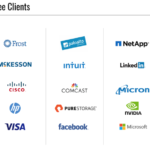
While it’s a jumble of various B2B partnerships, here are the logos that Noom shares publicly today:

In addition to the growing B2B sales team at Noom, the company recently inked a channel partnership with Virgin Pulse that gives it access to that company’s thousands of employer customers.

One final milestone among Noom’s broader healthcare moves was its move to appoint the former Chief Digital Officer of CVS Health and Aetna, Firdaus Bhathena, as the company’s new General Manager of Healthcare:

“In this newly-created role, Bhathena will lead a team focused on developing Noom’s healthcare channel and condition expansion. This includes extending Noom’s behavior change platform into chronic conditions and cultivating new distribution channels for behavior change programs focused on employers and payers.”

While Noom has had an on-again, off-again relationship with employers and other payers, the company spent a number of years before this most recent B2B push courting pharma companies. Here’s a look at some of Noom’s progress on the pharma front:

Noom’s first big B2B push: Pharma

On November 14, 2019, Noom’s CEO Saeju Jeong gave a keynote speech to an audience that included many pharma execs and shared many of the stunning growth metrics captured in the charts above. Jeong was clearly looking to impress the audience with his company’s staggering growth over the previous three years.

“Thank you for having me here today so that I could give a talk because I have been waiting for this moment for the last three years. Why is that? I attempted to talk to one of you guys four years ago [in 2015], and I had no chance… because we were ‘nobody’. We were a tiny company.”

Jeong was right that in 2015 Noom was a still tiny company, but it had already held discussions with pharma companies prior to 2015 and it already had a big deal in place with Novo Nordisk before his talk that day in 2019. Here’s a rundown of Noom’s history of pharma partnerships:

In the spring of 2013, Noom’s co-founder and President Artem Petakov flew to London to discuss Noom with the heads of GlaxoSmithKline‘s wellness and nutrition businesses. While it appears not much came of that particular meeting, within a few years Noom would rack up partnerships with a number of the world’s largest life sciences companies.

Novo Nordisk offers Noom to obesity patients on Saxenda – 2018 to present

Noom’s flagship pharma partnership is with Novo Nordisk, which offers a version of Noom’s weight loss program to patients taking Novo’s obesity medication Saxenda. As Noom’s other pharma deals develop, it’s likely most of them will mirror the arrangement Noom forged with Novo.

If patients prescribed Saxenda enroll in Novo’s patient assistance program, which is called SaxendaCare, they have the option of selecting no additional support, telephone-based help from Novo’s call center, or they can receive a 100 percent subsidized, one-year subscription to Noom.

However, this isn’t the same program that Noom offers D2C:

  • The Saxenda-version of Noom carries with it a customized, obesity-specific curriculum that Novo helped develop with Noom.
  • It also includes a medication adherence module, which the consumer version of Noom does not have.
  • It also has a significantly lower user-to-coach ratio than the D2C version of Noom.
  • Finally, the coaches who participate in the Saxenda Noom program have special training to act as the first line of defense for adverse events related to Saxenda. The coaches are in a position to flag and escalate those to Novo’s team.

(More on the Novo-Noom partnership in a minute, but it’s worth noting why Noom says it began pursuing these pharma deals. While Noom has successfully sold its program to millions of users, the company’s mission is to scale it to as many people as need it. Noom sees deals with pharma — and other B2B endeavors — as a way to reach people who might benefit from Noom but who can’t afford to pay for it out-of-pocket.)

While Noom began piloting with Novo Nordisk sometime in 2018, Novo announced the partnership in October 2019. At the time of the official announcement, Noom and Novo had enrolled 4,000 patients in the SaxendaCare+Noom program. By June 2020 they had enrolled more than 10,000.

During an investor day presentation in late 2019, Novo Nordisk’s EVP of commercial strategy and corporate affairs Camilla Sylvest presented the slide above, which showed that Noom (coupled with patient services called SaxendaCare) improved adherence to Novo’s Saxenda obesity drug. Sylvest indicated that the percent growth refers to the number of months that Saxenda patients remained on the therapy, or “stay time.” Here’s what she said about the slide at the time:

“Where you see we can support patients is on adherence. Right now the stay time with Saxenda is four to five months. That is, of course, not very long. We have seen from studies that when we combine Saxenda with SaxendaCare and we combine it with other behavioral modification programs like Noom like you see here, we are actually able to increase the stay time at the adherence at 33 percent. That means that behavioral modification at obesity along with weight loss products actually gives an even longer stay time and with that an even stronger ability to lose weight.”

Worldwide sales of Saxenda topped $918 million in 2020 and $852 million in 2019. Given these massive numbers, a successful partnership with Novo will likely show up in Noom’s S-1 filing. If there’s no mention of this partnership’s impact on Noom’s revenue, that would be an important signal about Noom’s pharma prospects.

Boehringer Ingelheim is studying Noom for heart failure patients – October 2020:

Yale University is sponsoring a trial in collaboration with Boehringer Ingelheim that explores the effect of Noom’s weight loss program on patients with heart failure. The study assigns heart failure patients to one of four arms: standard of care, BodyPort, Noom, or Conversa. More in the clinical trial post here. Here’s why BI decided to set up this trial with Yale, according to Christine Marsh SVP of Market Access at Boehringer Ingelheim Pharmaceuticals:

“Exploring solutions for the heart failure community to help manage this debilitating condition is a priority for Boehringer Ingelheim. We launched this study with Yale to help identify how digital health technology may address some of the key pain points for adults with heart failure, like the need for more frequent communication with healthcare providers in between visits and coaching to help with the daily management of the condition.”

AstraZeneca is studying Noom for patients with hyperkalaemia – August 2021

Interestingly, Noom will provide nutrition coaching to participants in both arms of this study, which AstraZeneca first revealed in August 2021: “Advice will be provided by dietitians at study visits and by Noom app between visits.” Here’s the study’s full detailed description:

“This is a Phase IV, randomized, controlled, open-label, parallel-group, multicentre, prospective study to evaluate the effect of the combination of [Sodium Zirconium Cyclosilicate] and enhanced nutritional advice to consume fruit and vegetables as compared to SoC in reducing S-K+ levels in participants with hyperkalaemia on haemodialysis. Following 7-day screening, all participants who are enrolled will begin an up to 1-month HK Treatment Phase with SZC as per local label. Participants will receive dietary advice consistent with SoC at that site, including K+ restriction. A 4-month Diet Comparison Phase will begin next with participants being randomized to either continue taking SZC, which can be titrated as needed to maintain target S-K+ , and receive enhanced nutritional advice to consume fruit and vegetables (SZC arm), or SZC will be withdrawn and participants will receive SoC, including dietary K+ restriction (SoC arm).”

Allergan-AbbVie: I also heard that Noom had inked some kind of partnership with Allergan-AbbVie, but I couldn’t find any details on that one, including whether it is still active.

In July 2021 Lifescan and Noom announced plans to commercialize a diabetes management program powered by Noom’s software and Lifescan’s meters. The company said that the program will be available to consumers in the US this fall before becoming available to healthcare providers and payors “as a reimbursed adjudicated option” in early 2022.

Noom Korea also put together a handful of deals with pharmaceutical and medical device companies. Those included a pilot study with Roche Diagnostics in October 2017 for a Noom-powered, 12-week diabetes management program that used AccuChek blood glucose meters. Noom Korea also inked deals with Korean pharma companies like Daewoong and Dong-ah.

In January 2020 Noom also announced a deal with Eversana, which has since bundled Noom’s coaching program with its own patient service programs. Eversana will sell the combined offering to its life sciences clients. Here’s what Eversana CEO Jim Lang said as part of the announcement:

“Despite a long road to diagnosis, adherence to therapy falls to 50 percent to 80 percent for patients with complex, chronic diseases who routinely deal with difficulties handling side effects, navigating lifestyle changes, and finding the education and resources needed to understand their disease and care. By integrating Noom’s proven behavioral health technology with Eversana’s best-in-class patient service programs, we will help manufacturers give their patients the personalized support they have long needed and deserved.”

What’s next for Noom

Back in 2016, Noom’s future plans were to expand into a wider range of medical conditions and pivot into B2B.

As its pharma partnerships develop and its other B2B initiatives take shape, the company may yet realize that 2016 vision, or an even more expansive one. As one Noom exec said recently:

“What books are to Amazon, weight loss is to us.”

Noom will drive future growth in a few other ways too.

On the consumer side, two relatively obvious but important levers that Noom is focusing on in the immediate term include building out its internationalization efforts and trying to get better at marketing to men.

International: While Noom has had offices in the US, Korea, and Japan for many years, it has begun to open new offices and establish new subsidiaries in Europe this past year. The company has also begun to hire aggressively for a more robust international rollout of its products. One recent job ad pitched the opportunity as “building Noom’s international business from the ground up.”

As noted up top, some 80 percent of Noom’s users are US-based, which leaves a lot of potential international revenue for the company.

Noom for Men: Noom executives have also noted publicly that most of the weight loss market continues to target females. Just speculation but I could see Noom launching a Noom for Men brand as a way to bring in more of them.

Virtual visits: As noted in the product timeline above, Noom let slip a key detail of ones of its beta programs when it accidentally sent an email to the wrong email list. The email was an invitation to join a virtual waiting room for an upcoming virtual visit with some kind of health provider. Will Noom Mood evolve into an on-demand therapy platform? Does this errant email point to forthcoming telehealth capabilities for Noom’s clinical programs thanks to a partnership with one of the established virtual visits companies like Teladoc, Amwell, or Plushcare?

FDA-authorized, prescribable Noom? This one is a little outside of the box, but if Noom’s pharma partnerships continue to progress, it is possible that Noom and a pharma partner pursue some flavor of a combination product. Of course, if Noom’s partnership with Novo proves not to be as lucrative as it might have been, the company may back away from some of its pharma work.

Noom’s president and co-founder Artem Petakov has said he tries to organize the company’s efforts into three broad buckets:

  • 70 percent on the proven stuff
  • 20 percent on slightly exploratory stuff
  • 10 percent on moonshots

So, some of the above may prove to be moonshots that never come to pass.

The next big move for Noom is its widely expected IPO, which Reuters reports some exclusive details on back in July:

“The New York-based company aims to more than double its valuation from its May private fundraising round when investors led by buyout firm Silver Lake valued it at $3.7 billion, the sources said. The IPO could come by early next year, they added.”

I’ll update this report once Noom’s S-1 hits the SEC.

article end logo
×
Approximating Omada Health’s S-1 Before Its 2025 IPO
11.22.24
21 min. Read
The Spring Health Report
8.18.23
20 min. Read
The Sword Health Report
8.02.23
21 min. Read
The Big Health Report
5.12.23
29 min. Read
The Virta Health Report
10.28.22
31 min. Read
Who controls the Spice?
5.27.22
25 min. Read
The Crossover Health Report
4.19.21
22 min. Read
Analysis: Livongo founders’ HAAC SPAC
1.25.21
11 min. Read
The UnitedHealth Group Report
12.30.20
30 min. Read
The Virgin Pulse Report
9.25.20
14 min. Read
  • First
  • Previous
  • 1 of 2
  • Next
  • Last